
Finnish education innovation
From a Real-World Lesson to a Live Classroom Market The Business School Looks to Asia
The Business School turns a Business lesson into a live competitive market—and is now exploring opportunities with schools and education partners across Asia.
What if students could experience the consequences of business decisions before those decisions involved real money?
That question is at the heart of The Business School, a browser-based classroom simulation developed by Finnish company TBS Education Ltd Oy. During a single lesson, students form rival companies, take on executive roles and compete in the same live market.
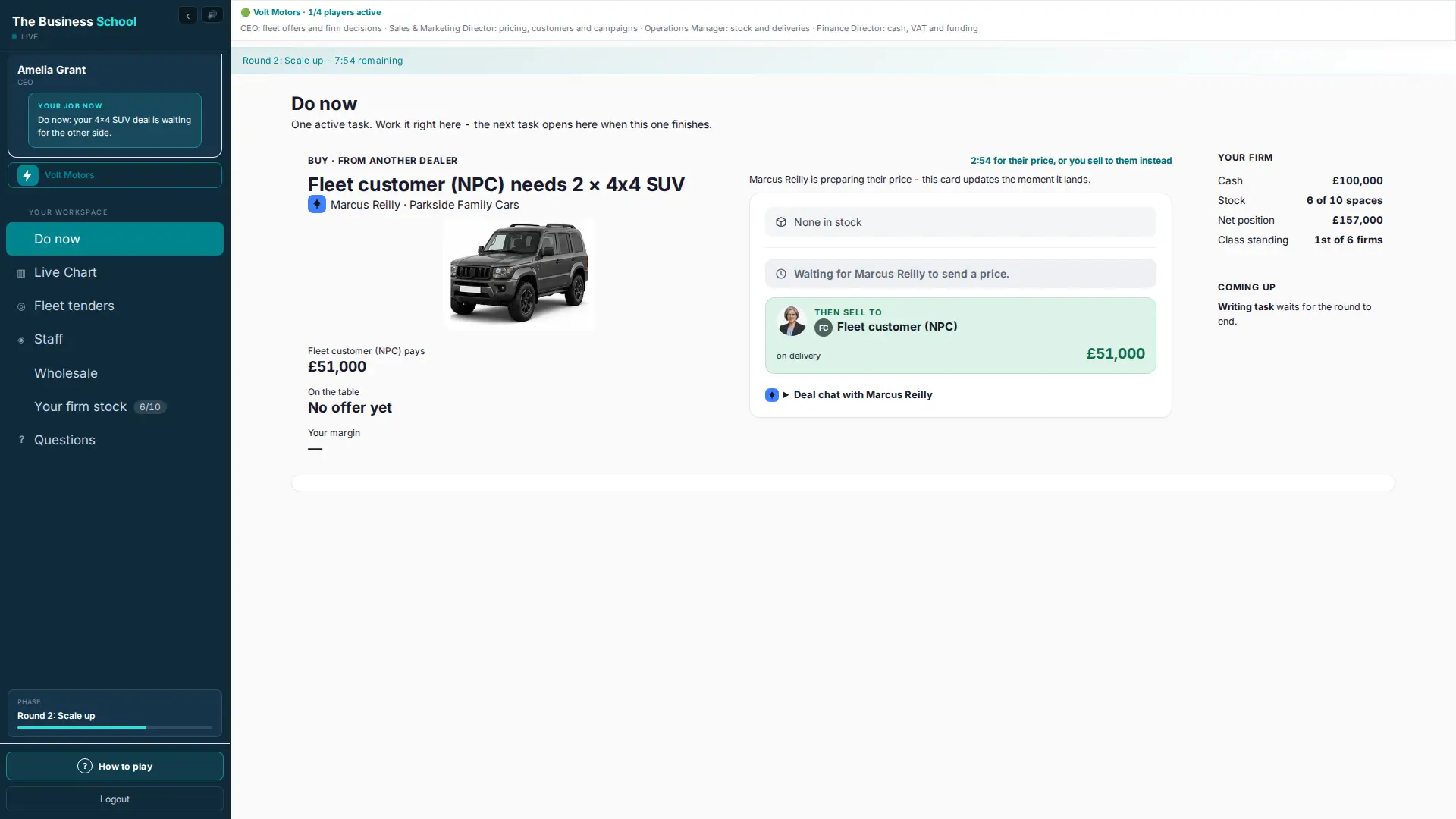
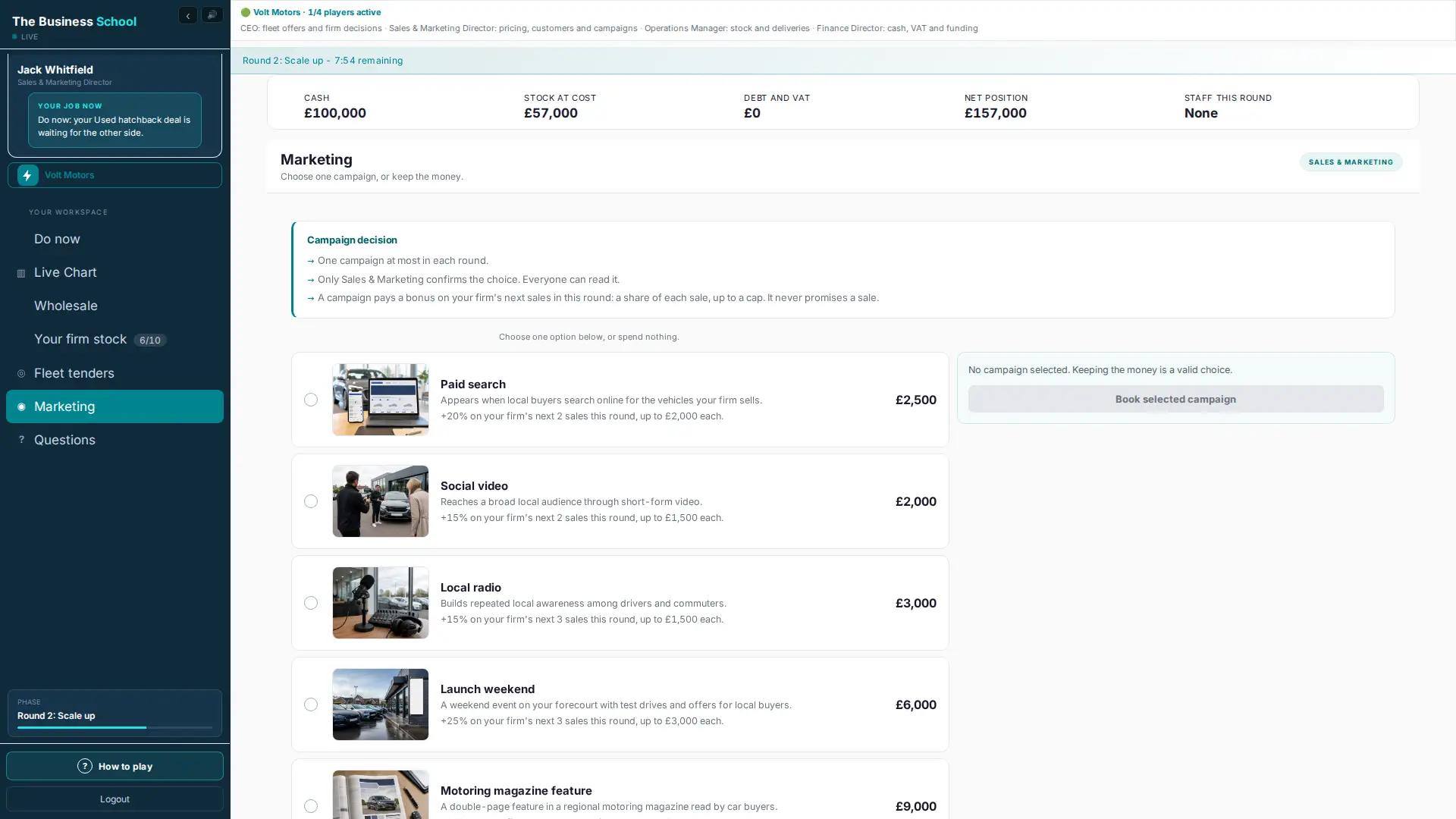
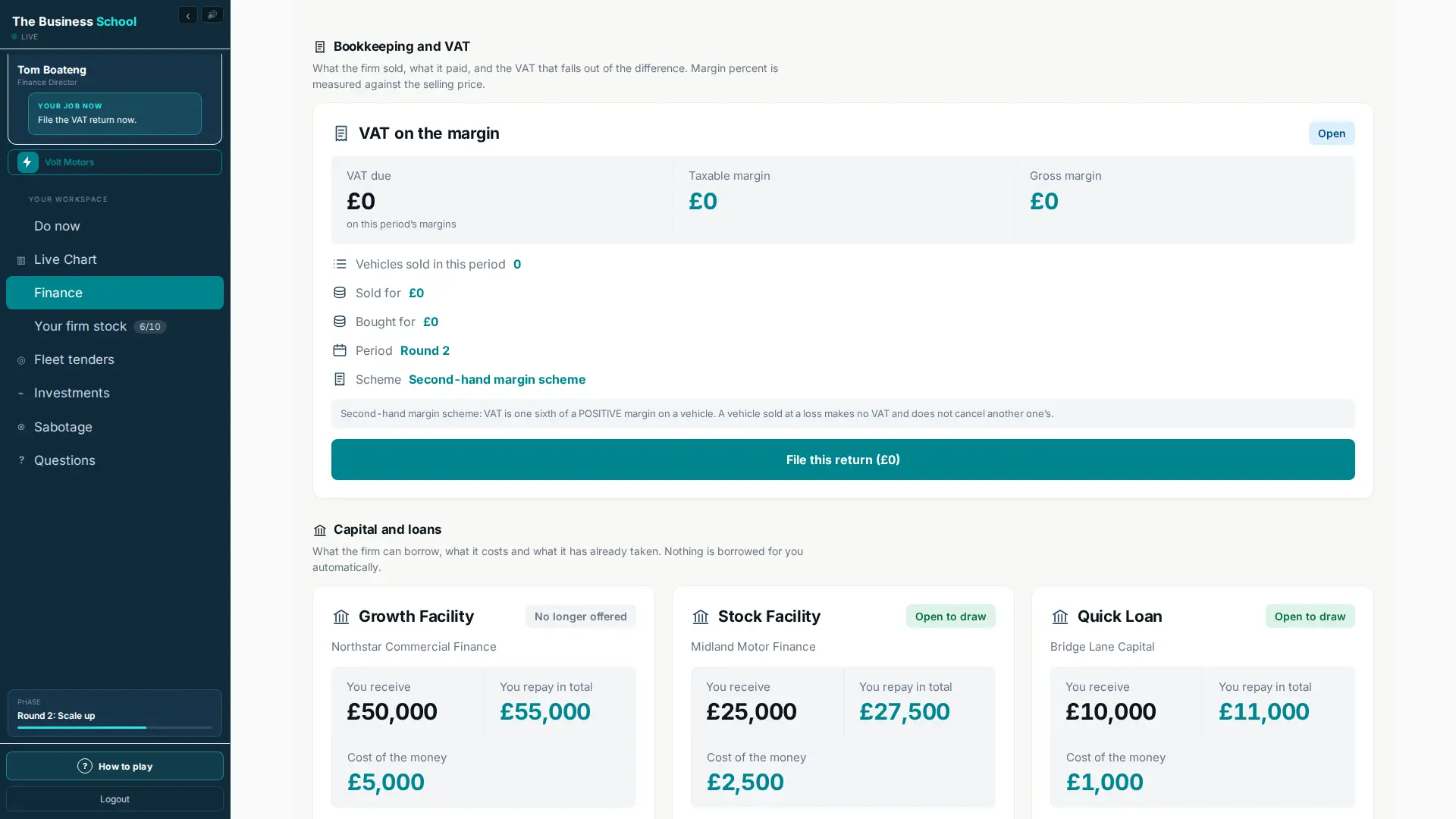
They set prices, manage stock, hire employees, file VAT returns, consider investments, negotiate with competitors and respond to unexpected events. Every decision affects the company’s position—and the market shared by the entire class.
The objective is straightforward: to help students understand business by running one.

The founder’s story
Built from a lesson the classroom never taught
The story began with the real-life experience of the company’s founder, Sakari Laajoki.
At 17, Laajoki was organising large events with his own money at risk. He had ticket sales to manage, venues to pay and suppliers expecting payment. A missed tax return eventually led to €8,400 in debt recovery.
The experience exposed a gap between learning the definitions of business and understanding the consequences of business decisions.
That became the starting point for The Business School: a place where students can make decisions, test ideas and learn from mistakes without facing real financial consequences.
At 17, I organised large-scale events, took real financial risks, and learned the hard way what happens when you miss a tax return.Sakari Laajoki, founder of TBS Education
The company also benefits from practical teaching experience. Board member Olli-Pekka Laajoki has spent ten years teaching in Finnish vocational education, helping ensure that the material is designed for real classrooms rather than simply looking good in a product demonstration.
Inside the simulation
One classroom, several competing companies
The Business School is designed for Business and Enterprise education at secondary and upper-secondary level.
A simulation can involve between six and 32 students, divided into as many as eight competing companies. Each company consists of students with different responsibilities.
The current simulation places the companies in the motor trade. Each team manages a vehicle dealership and competes against the other firms operating in the classroom market.
Students must work together, but their decisions also affect their competitors. A company missing a particular vehicle may need to negotiate with another team. Pricing too aggressively may increase sales but damage profitability. An investment may produce a return—or reduce the company’s available cash at exactly the wrong moment.
The shared market means there is no single script that guarantees success. Students must communicate, interpret information and adapt their strategy as the lesson develops.
Made for teachers
A complete simulation in one lesson
Teachers can adjust the simulation to fit the time available. The three trading rounds can be set at different lengths, allowing the exercise to run for approximately 30 to 75 minutes.
Create the session
The teacher sets up the lesson and receives a six-digit classroom PIN.
Students join
Students enter with the PIN and a first name or classroom nickname—no personal account required.
Run the market
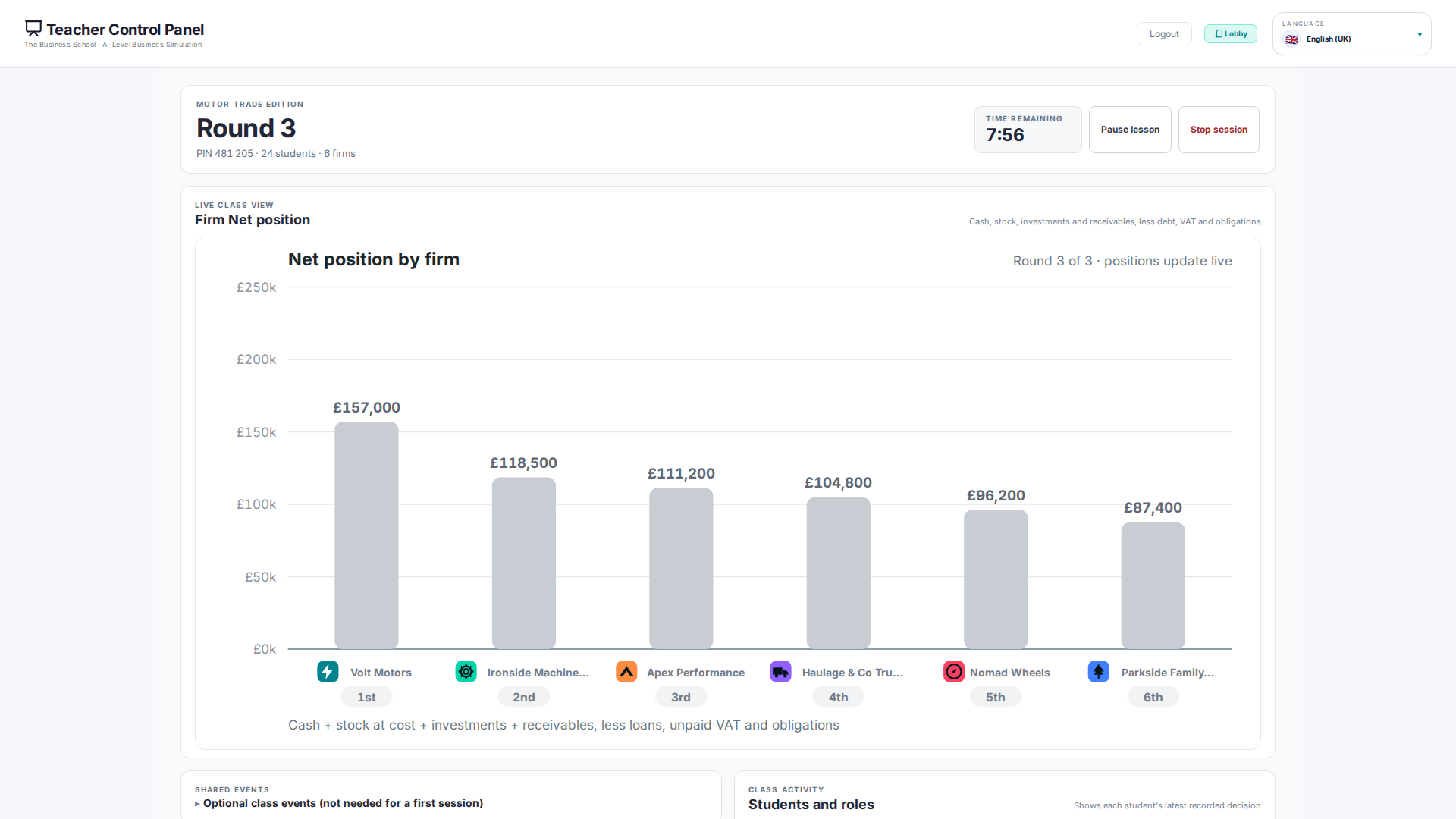
Teams make decisions while the teacher follows activity from one live control panel.
Reflect and review
Students receive private reports and the teacher receives a class analysis within 48 hours.
Students open the platform on a laptop, desktop computer or Chromebook. They do not need to create personal accounts, provide email addresses or install software.
The platform forms the companies and gives each student a role. A short tutorial explains their responsibilities before trading begins. During the lesson, the teacher can pause the simulation for discussion, monitor student activity, introduce an event and project the companies’ changing positions for the whole class to see.
This combination of competition and teacher control helps make the exercise engaging without separating it from the learning objectives of the lesson.
 Trade and pricing
decisions
 Marketing choices and
budgets
 Bookkeeping, VAT and
funding
Learning evidence
More than a game
The Business School is intended to support teaching rather than operate as a stand-alone entertainment product. Key business decisions are linked to relevant Edexcel topics, and the simulation can also be used with GCSE, IGCSE, A-Level, BTEC, IB and Key Stage 3 Business and Enterprise classes.
Students encounter pricing, cash flow, marketing, recruitment, taxation, investment and negotiation through decisions that have visible consequences.
At the end of the session, every student completes a short reflection and receives a private report containing their recorded decisions, answers and participation. The teacher receives a class analysis by email within 48 hours.
The reports provide evidence for discussion and further teaching. They are not automatic grades or examination results: assessment remains with the teacher.
International classrooms
Encouraging feedback beyond Finland
The simulation has already been used in British and international school environments.
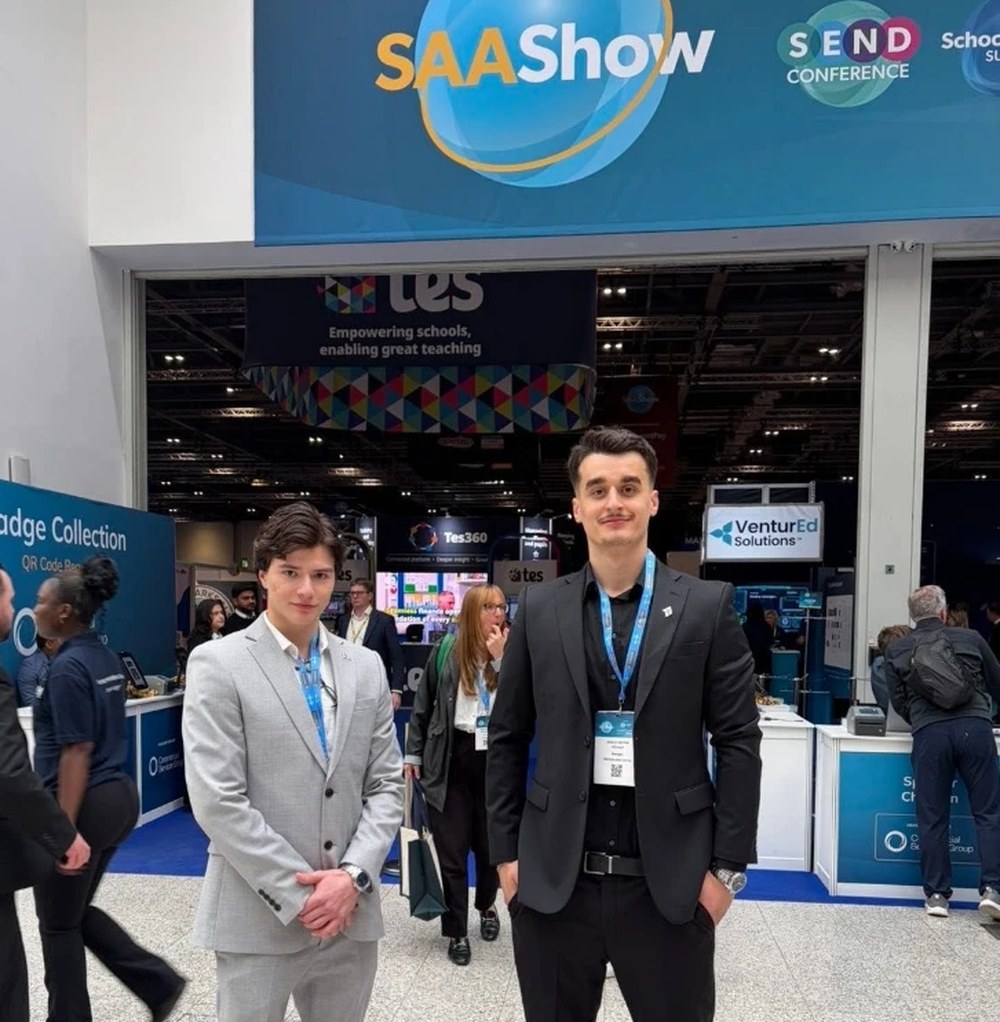
Early feedback suggests that students respond positively to the combination of competition, responsibility and immediate results. Gulf English School in Kuwait reported that students enjoyed the experience and now uses the simulation regularly. A teacher at Verbier International School in Switzerland returned to run the platform with a second class.
For TBS Education, returning teachers are particularly valuable. A teacher choosing to run another session indicates that the platform works not only as an interesting demonstration, but also as a practical classroom resource.
Profit gives you an adrenaline rush.Student feedback
Regional growth
The next opportunity: international schools in Asia
TBS Education is now exploring how The Business School could support international schools and Business education across Asia.
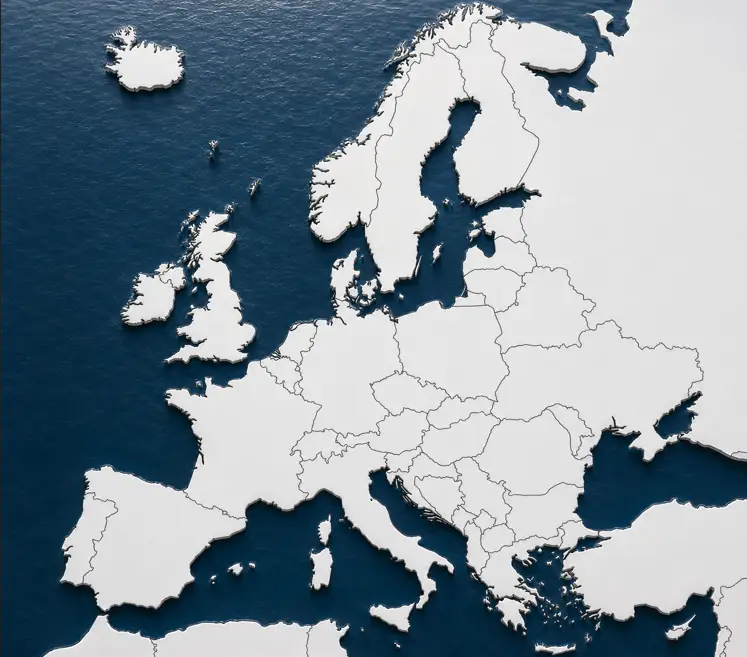
Initial areas of interest include Singapore, Hong Kong, Malaysia, Indonesia and the Philippines. The most natural starting points are international schools and school groups already teaching British or international Business qualifications.
Who TBS Education wants to meet
- International schools and Business teachers
- Heads of Business and Enterprise departments
- International school groups
- Education technology distributors
- Regional training and education partners
The browser-based model supports international expansion because it does not require schools to purchase specialist equipment or install complicated software. The same platform can be introduced to a classroom through a school licence and operated by the teacher within an existing lesson.
However, entering a new education market requires more than making a digital product available online. Schools need local knowledge, relevant support and confidence that the solution fits their curriculum and classroom practices.
The company is looking both for schools interested in trying the simulation and for partners that understand local education markets and can help introduce the platform to the right institutions.
Schools
International schools seeking an active, practical way to teach Business and Enterprise.
Educators
Teachers and department heads interested in testing the simulation in a real classroom.
Partners
Education groups and regional distributors able to open the right local conversations.
Practical learning
Learning business by making business decisions
Business education often begins with concepts, models and definitions. The Business School adds responsibility and consequences to that foundation.
Students see how one pricing decision influences demand, how a hiring decision affects costs and how a negotiation with a competitor can change the position of both companies. They experience uncertainty, time pressure and teamwork in a controlled classroom environment.
The first real business mistake a young person makes should not need to become an expensive one. With the right simulation, it can become a lesson instead.
Schools and education partners
Explore The Business School
Schools, education groups and potential distribution partners can explore the teacher demonstration, join the waiting list or contact TBS Education to discuss future cooperation.
School invitations begin 1 December 2026.
Partner content produced from information and materials supplied by TBS Education Ltd Oy and publicly available company information. Images and product screenshots: TBS Education Ltd Oy / thebusiness.school. Product details and availability may change; please confirm current information directly with TBS Education.