
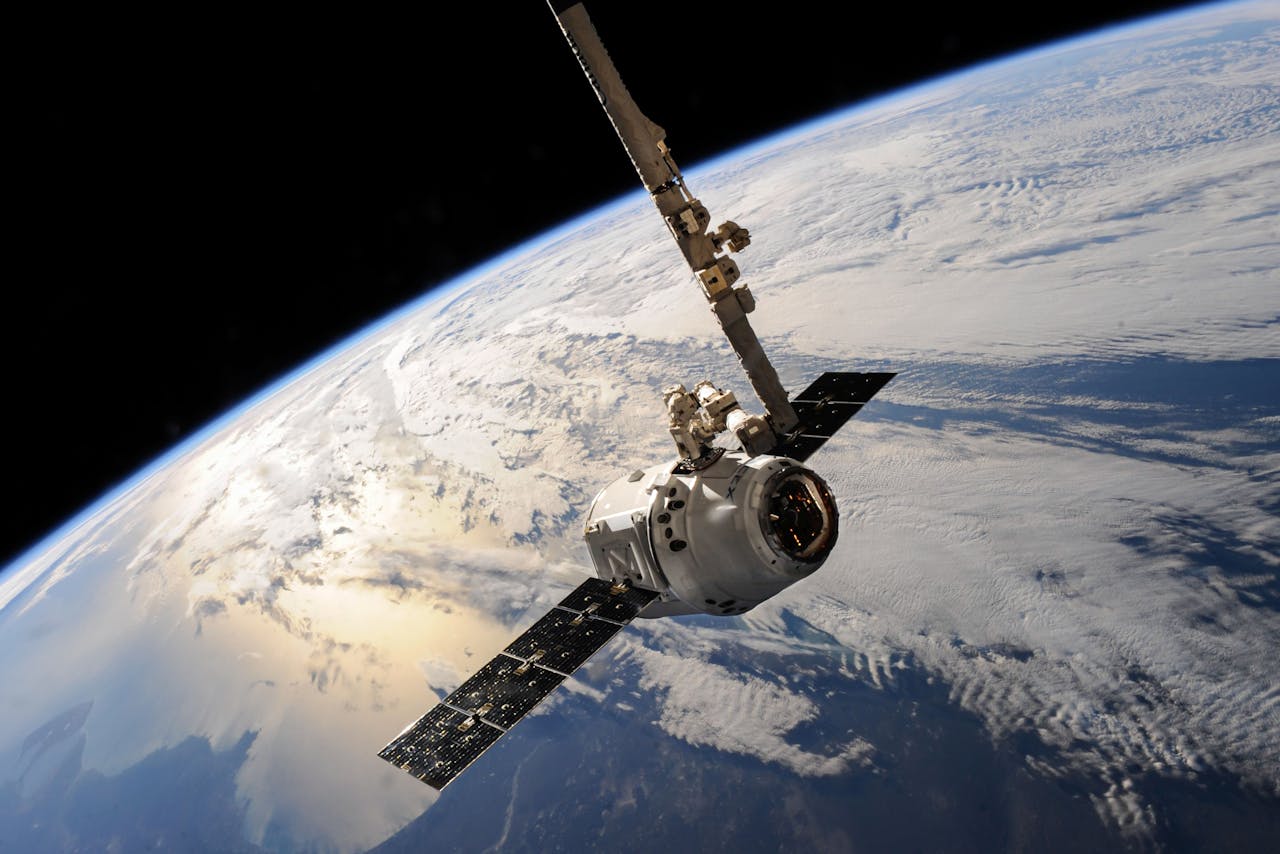
Japan's satellites already have such high resolution that they can aid the efficient management of dairy farms and post-disaster recovery and restoration.
Japan’s first satellite was Ohsumi, which was launched in 1970 by a team from a research institute at the University of Tokyo.
A little over half a century later, many types of satellites are indispensable in our daily lives, including earth observation satellites for weather forecasting; communications and broadcasting satellites essential for transmitting data such as TV signals; and positioning satellites for determining the positions of cars and others.
Early satellites could at best be used to distinguish whether land on the Earth was an agricultural field or a residential area. Technology in modern satellites has evolved to the point where the type of vehicle on a road can be identified, and the risk of a water pipe leak can be calculated based on ground surface temperature and ground deformation.
Source: The Japan News