

Persistent Pain Points, Rising Pressures
The International Air Transport Association's (IATA) white paper states that passenger volumes are projected to double by 2041, intensifying strain on airport infrastructure and processes. Despite the introduction of online check-in, self-service kiosks, automated bag drops, and biometric gates, air travel remains fragmented and heavily reliant on manual document checks. The result? Persistent congestion and long queues at security and border control continue to top traveller frustrations, with 39% citing queue times as a significant concern.
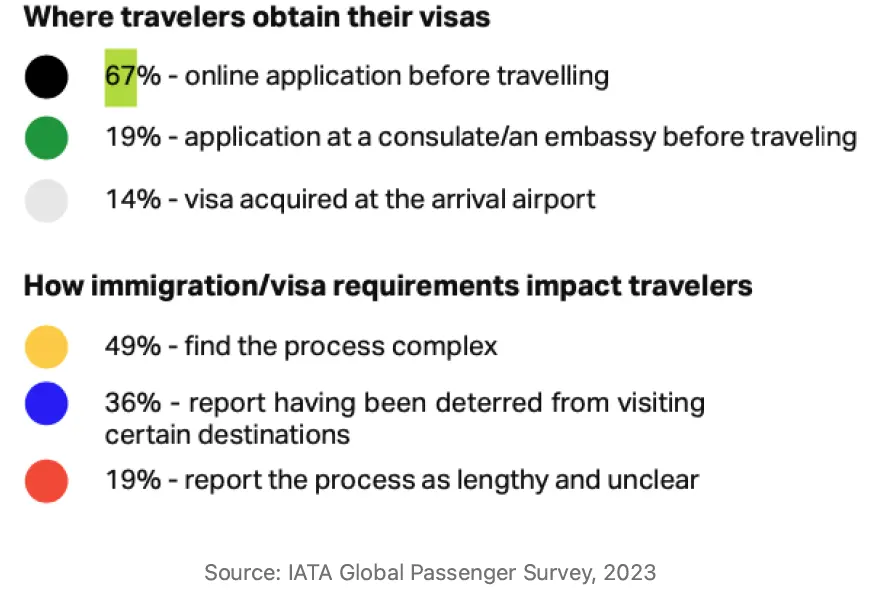
Complex and ever-changing visa requirements deter 36% of travellers from specific destinations, and nearly half find the process confusing or excessively time-consuming. Regulations are constantly evolving, with an average of 75 updates daily, further complicating travel planning.
Digital Solutions: Promise and Practicality
The vision for air travel is clear: a seamless, contactless journey powered by digital identities and biometrics. The EU is preparing to issue government-backed digital identities stored on mobile devices and accepted by airlines, airports, and border authorities. The EU Digital Travel Credential (DTC) is expected to become available around 2030. These digital identities will allow passengers to use their faces as ID and boarding passes, streamlining identification and security at every touchpoint.
Pre-travel admissibility—completing immigration and visa requirements online before departure is also advancing, promising to reduce airport bottlenecks and minimise the risk of denied boarding. In ASEAN, major hubs like Singapore and Bangkok pilot biometric e-gates and digital visa platforms. Regional efforts are underway to harmonise digital travel credentials, although progress varies by country.
Short-Term Reality: More Congestion Likely
Yet, these innovations are not a panacea, at least not immediately. Many digital tools automate legacy steps rather than fundamentally rethinking the passenger journey. As passenger numbers surge, the risk is that congestion will intensify before the benefits of digital transformation are fully realised. Without accelerated, industry-wide adoption and interoperability, travellers should expect longer queues and more friction in the near term.
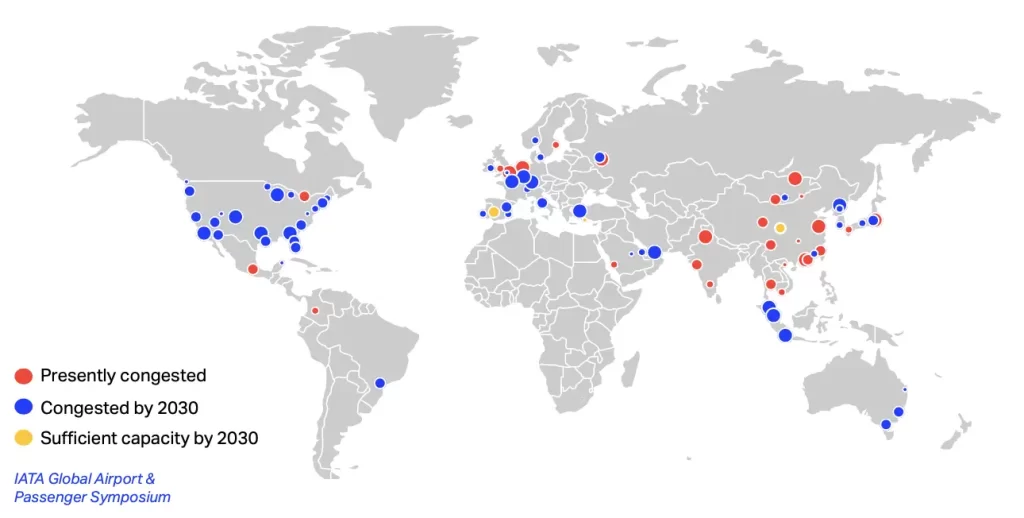
Many primary airports, including London Heathrow, Amsterdam Schiphol, Delhi Indira Gandhi, Shanghai Pudong, and Bangkok Suvarnabhumi, are already marked as congested. If processes are not modernised, more are projected to reach critical capacity within the next five years.
The Path Forward
The technological foundation is in place, and passenger appetite for digital, mobile-first solutions is growing: 87% are willing to share immigration information to expedite airport processes and 85% report satisfaction with biometric identification.
"Passengers have made it clear they want to spend less time queuing and move through the airport faster. And they are increasingly willing to use biometric data to complete more pre-departure tasks off airport to achieve this."
- Alan Murray Hayden, IATA Director for Airlines, Airports and Security Solutions
The challenge now is execution: aligning governments, airlines, and airports to deliver end-to-end, interoperable systems that can scale with demand and meet evolving expectations.
Bottom Line
Digital aviation holds immense promise, with concrete improvements like EU digital identities and biometric processing poised to reshape the passenger experience. However, as the sector grapples with unprecedented growth, travellers should prepare for more congestion and complexity before the full benefits of seamless, contactless journeys are realised. The next few years will be an actual test of both patience and progress.
Sources:
IATA, "Unlocking the Future: The Passenger's Journey Toward a Seamless and Contactless Experience" (White Paper)
Editor: Antti Rahikainen
Cover image generated using AI tools